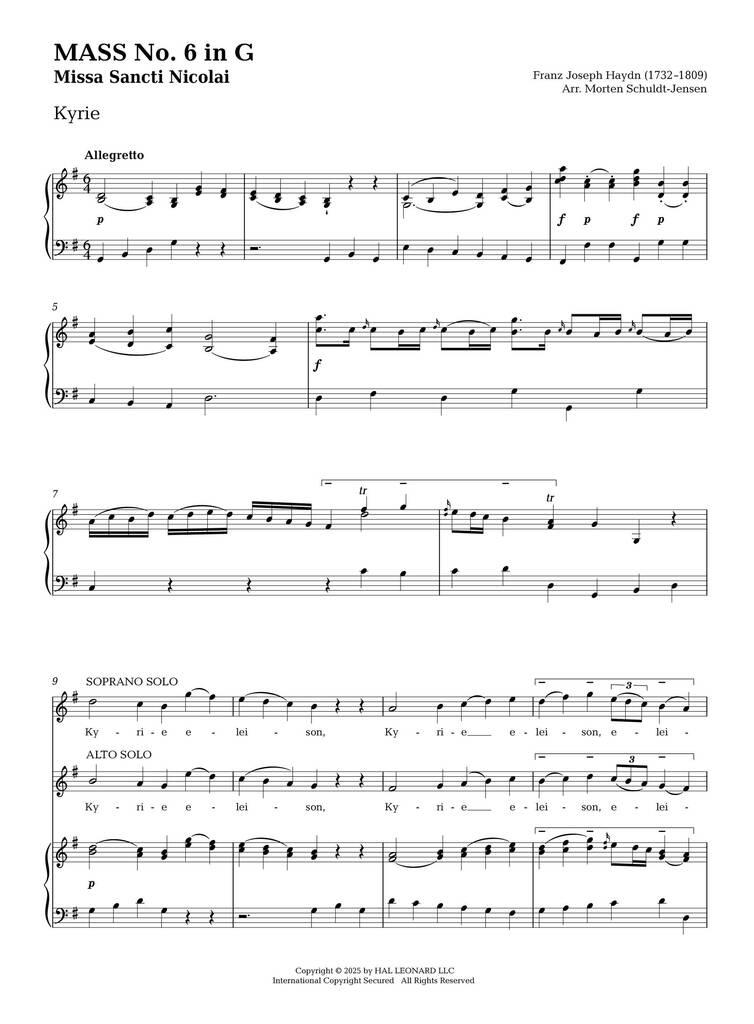
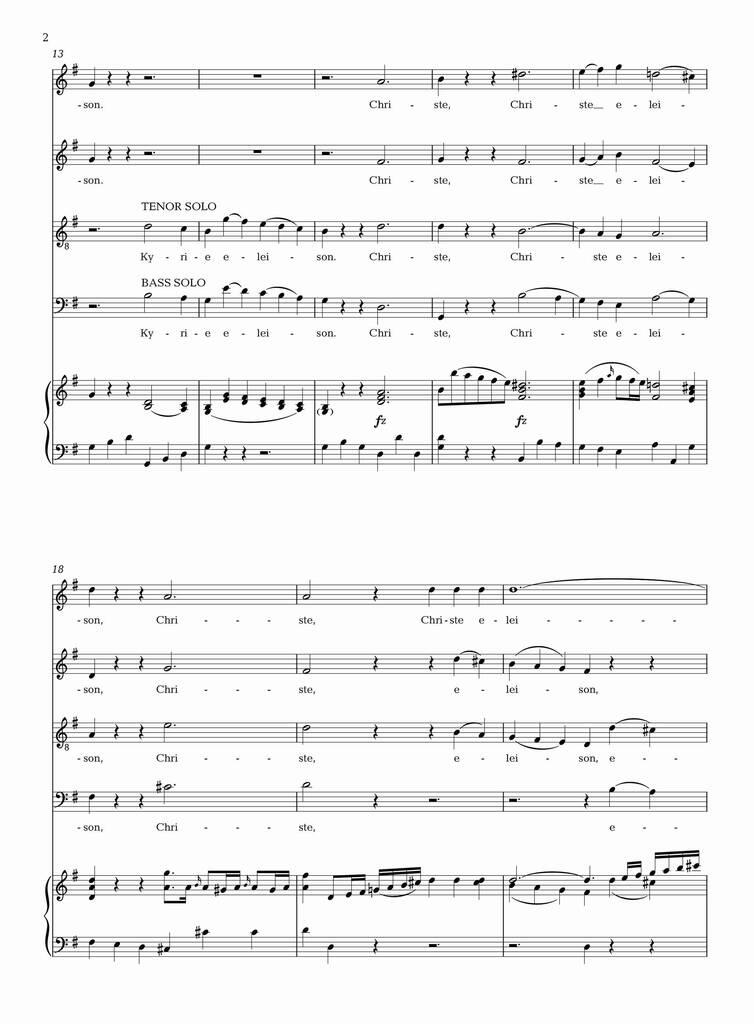
Missa Sancti Nicolai (Nikolaimesse) Hob. XXII:6
Internal Reference:
512627
Bearbeiter:
Morten Schuldt-Jensen
Besetzung:
SoliSATB ChSAB Klav/Org
Komponist:
HAYDN Joseph
Verlag:
Hal Leonard
Verlagsnummer:
HL01847504
ISBN:
9798350152791
Ausgabe:
Partitur
DOB_Sparte:
Messe
Epoche:
Klass
Ausgabeformat:
Kleinformat
Editorial Note: Some pieces in this volume feature brackets that comprise ‘ternary cells’ – cells of three beats – of differing lengths. Before the mid 17th century in the stile antico, it was common for each vocal line to have an independent stress pattern: a sequence of binary or ternary accentuations guided by the declamation of the text in order to give life to each voice. Despite the non-legato of the individual single layer – created by elements including the musical articulation, the (hairpin) phrasing of the ternary cells and a natural text declamation – the constant displacement of stresses between the voices provides an overall feeling of flow right through to the next cadence, at which point the ‘cells’ come together. The voices in these SAM arrangements take on more than just their own polyphonic role, occasionally switching between parts to maintain the integrity of the original music. Despite this, the original orchestral accompaniment can be used together with this version without restraint, and the work can also be easily performed with the piano reduction.